

Your guide to riding pain-free.
Bike setup, pain, gear: our articles help you understand your position on the bike and dial it in to the millimetre, from home.
 Featured
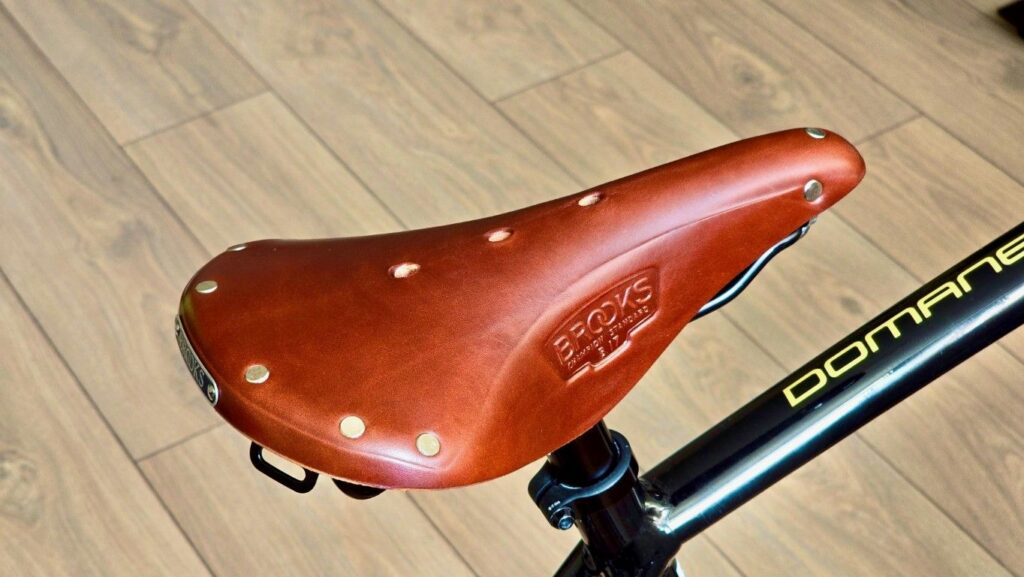
Choosing a saddle: width, shape and sit bone support
A saddle is chosen first by the width of your sit bones, then by your position. How to measure, what width to aim for and which shape to choose.
Read the articleStart with what you feel
Pick the situation that sounds like you: we’ll show you the most common cause and the articles to read first.
“My knees hurt”
Most often, a saddle that’s a few millimetres too high or too low.
“My hands go numb”
Too much weight up front: your handlebar or stem needs adjusting.
“My back or neck hurts”
Often a handlebar that’s too low or a saddle that’s too far forward.
“I’m new to this. Where do I start?”
Understand what we measure, then nail your first video.
The easiest way to know what to adjust: an analysis of your position.
All articles
2 articles

Frame size: choosing well before you buy a bike
Height, inseam, stack and reach: how to choose the right frame size before you buy, and what adjustments can and can’t make up for afterwards.

Uncomfortable saddle: adjust before you replace it
Height, setback, tilt: before buying a new saddle, three adjustments to check, the symptoms that give them away and when to really change model.
Three angles are all you need to set up your bike
Each adjustment is based on one of your body angles, measured while you pedal. We compare it to an ideal range, then adjust one step at a time.
| Adjustment | What we measure | Ideal range |
|---|---|---|
| 1Saddle height | Maximum knee angle | 141 ± 5° |
| 2Handlebar reach | Average arm angle | 90 ± 5° |
| 3Handlebar height | Average back angle | 45 ± 5° |
One adjustment at a time. Adjust, film yourself again, then move on to the next one: the angles affect each other.
Measure your three angles on your own bike: your first analysis is free.