

Your guide to riding pain-free.
Bike setup, pain, gear: our articles help you understand your position on the bike and dial it in to the millimetre, from home.
 Featured
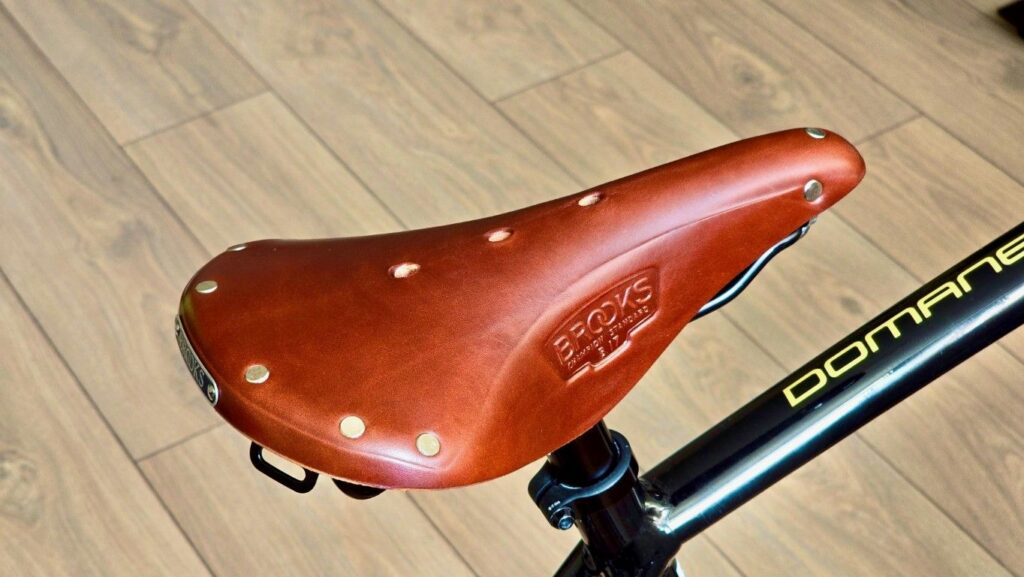
Choosing a saddle: width, shape and sit bone support
A saddle is chosen first by the width of your sit bones, then by your position. How to measure, what width to aim for and which shape to choose.
Read the articleStart with what you feel
Pick the situation that sounds like you: we’ll show you the most common cause and the articles to read first.
“My knees hurt”
Most often, a saddle that’s a few millimetres too high or too low.
“My hands go numb”
Too much weight up front: your handlebar or stem needs adjusting.
“My back or neck hurts”
Often a handlebar that’s too low or a saddle that’s too far forward.
“I’m new to this. Where do I start?”
Understand what we measure, then nail your first video.
The easiest way to know what to adjust: an analysis of your position.
All articles
6 articles

Handlebar height: using back inclination as a guide
A tense neck, an aching lower back: a handlebar that is too low shows in your back angle. The 45 ± 5° benchmark and how to raise or…

Handlebar reach: aim for a 90° arm opening
Straight arms, tense shoulders, a stiff neck? Handlebar reach is judged by arm opening: the 90 ± 5° benchmark and how to correct it.

Getting back on the bike in spring: 6 things to check in your position
After the winter, your position has often shifted without you noticing. The six things to check before your first ride, and how to get back into it without…

Saddle height: the knee angle method
141 ± 5° at bottom dead centre: the knee angle method step by step, from the video to the right number of millimetres.

Back pain when cycling: causes, adjustments and exercises
Lower back aching after two hours in the saddle? The causes of back pain on the bike, the adjustments to check in order and the habits that help.

Setting your saddle height: the complete guide
The 0.883 formula, the heel method, the knee angle: the methods for setting your saddle height, the key figures, the mistakes to avoid and a step-by-step guide.
Three angles are all you need to set up your bike
Each adjustment is based on one of your body angles, measured while you pedal. We compare it to an ideal range, then adjust one step at a time.
| Adjustment | What we measure | Ideal range |
|---|---|---|
| 1Saddle height | Maximum knee angle | 141 ± 5° |
| 2Handlebar reach | Average arm angle | 90 ± 5° |
| 3Handlebar height | Average back angle | 45 ± 5° |
One adjustment at a time. Adjust, film yourself again, then move on to the next one: the angles affect each other.
Measure your three angles on your own bike: your first analysis is free.